
To view historical photographs and antique postcards from Pinewoods Camp, visit the Photo Gallery; or view the history of Pinewoods preserved in our archives at the University of New Hampshire.
History
Early 1900s
When Helen Osborne Storrow founded Pinewoods Camp she launched a lasting tradition. As one of the oldest continuously operating facilities for traditional dance and music in the United States, Pinewoods attracts enthusiastic participants from around the world.
Helen Storrow was involved with the education and well-being of immigrant women, and she had a passion for folk dance as a pleasing form of exercise and community for urban women. Because of these interests, she was led to both
the fledgling Girl Scout Movement and the American offspring of the English Folk Dance Society (EFDS). Almost immediately, Helen took on a leadership role with both organizations. She formed her own Girl Scout troop and helped found the US Branch of the English Folk Dance Society when Cecil Sharp, the director, was in the United States for the first of four visits during World War I.
In 1915 Cecil Sharp and Helen Storrow recruited Lily Roberts, a young EFDS teacher from England, to serve the US Branch in Boston. Through the Storrow family’s progressive circles, Lily met and married Richard Conant, a Boston social worker. She remained Helen Storrow’s near daughter and associate in multiple spheres, became the local expert in folk dance teaching, and helped to run the US EFDS summer vacation schools.
Girl Scout Leadership Training School
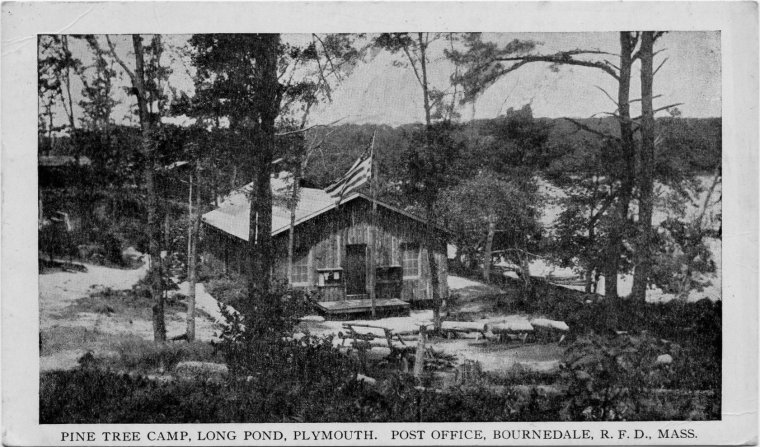
Camphouse 1930
In the 1910’s Girl Scout troops were emphasizing inclusiveness, the outdoors, self-reliance, and service, and needed competent women to be leaders. To this end, Helen Storrow developed the first Girl Scout Leadership Training School in 1916. After holding the school in Boston in 1917 and 1918, she opened Pine Tree Camp on her land on Long Pond in 1919. The property already had the current Camphouse, a dock, a mess hall tent (where Ampleforth is today), and enough land cleared for rows of tents. Singing and folk dancing were part of the curriculum.
Becoming a Dance Camp
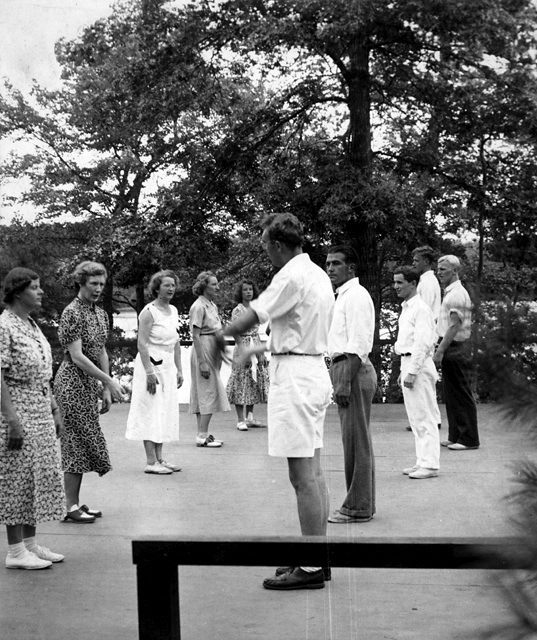 In 1924, Helen Storrow began the process of transforming Pine Tree Camp into a dance camp. She also purchased a larger parcel on Long Pond to become a new Girl Scout camp that would include the Leadership Training program. She and her builder John Raymond spent ten years developing both camps for their different futures. When the newer facility was ready, the Girl Scout Training School moved, taking the Pine Tree Camp name associated with it. On our current property, the first local EFDS summer dance camp was held in 1925, and the camp became devoted solely to dance, music, and song. Eight years later it was renamed Pinewoods Camp. Lily Conant managed the Pinewoods seasonal staff who made the meals and took care of the grounds, and what is now known as the Country Dance and Song Society (CDSS) ran the summer camp program. Helen Storrow participated each summer until she had to close camp for World War II.
The Conant Years
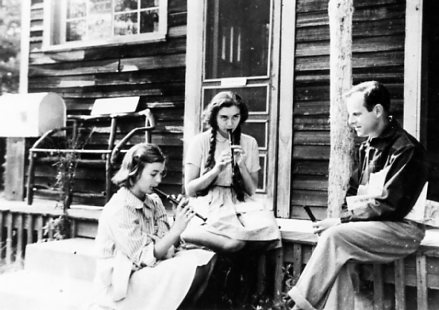 Lily and Richard Conant inherited Pinewoods Camp when Helen Storrow died in December 1944, and reopened the camp after it had been closed for several years due to the war. They managed the facility as a labor of love, often with a deficit and always with very little money available for capital improvements or maintenance. While the CDSS ran programs for three and then four weeks, the camp was also made available to other dancing and non-dancing groups, and some of the houses were rented out to families for summer vacation use. Additionally, the Pilgrim Fellowship held retreats and workshops for teenagers, and for 30 years Richard Conant hosted a social-workers weekend called the Pinewoods Institute.
Transition to Non-Profit Pinewoods Camp, Inc. (PCI)
In 1975, the Conant family sold the camp to the new non-profit, Pinewoods Camp, Inc. (PCI), created by a collaboration between the Conant family; the Country Dance and Song Society; Country Dance Society, Boston Centre; and the Royal Scottish Country Dance Society, Boston Branch. PCI purchased Camp with additional donations from campers and pond neighbors, plus money collected from fundraising events. It was a true community effort.
Initially, members of the Board of Directors of Pinewoods Camp, Inc. managed the camp and hired a seasonal Camp Manager. Over time, new organizations offered programs, and the camp season lengthened. In 2000, the Camp Manager position grew into a year-round Executive Directorship.
Continuing Through Today into the future

The old user office (originally the kitchen)
Our Vision
A welcoming rustic setting where dance, music, and song traditions thrive.
Our Mission
Pinewoods Camp, Inc. operates and stewards Pinewoods Camp and its woodland environment primarily for the use and benefit of communities that teach and nurture participatory arts with an emphasis on dance, music, and song.
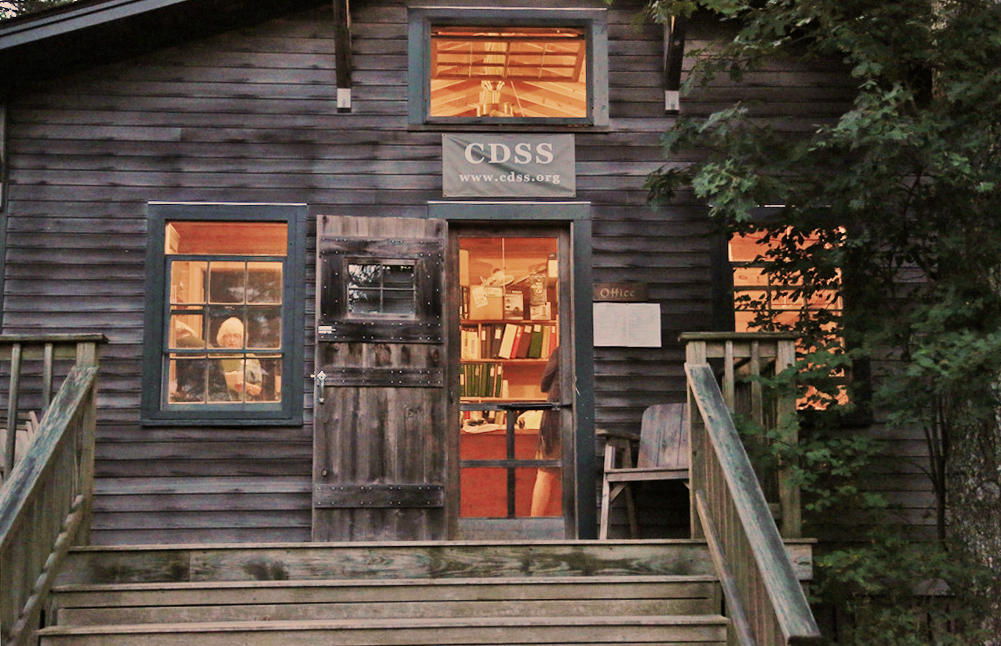
The new user office at night